Cristiano Porqueddu
-
Numero contenuti
3667 -
Iscritto
-
Ultima visita
-
Giorni Vinti
151
Tipo di contenuto
Profili
CD della collana CGWC
Forum
Tutti i contenuti di Cristiano Porqueddu
-
Agustín Barrios: Complete Studies and Preludes, Marco Caiazza https://t.co/PWMjC1spGj https://t.co/U1qzNMMC5H
-
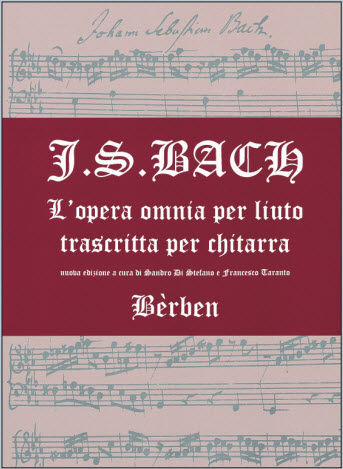
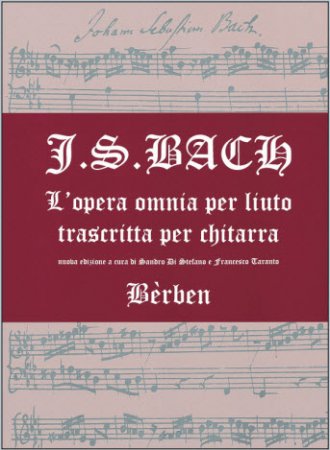
Ciao @Marina71. Ti consiglio questa pubblicazione delle Edizioni Bèrben di Ancona curata da Sandro di Stefano e @Francesco Taranto A me è stata estremamente utile. Informazioni e modalità di acquisto qui: http://www.berben.it/doc/new/Novita_BACH_1.pdf
-
Ediciones Espiral Eterna
Cristiano Porqueddu ha risposto a Cristiano Porqueddu nella discussione Quattro chiacchiere e voci di corridoio.
Sì, una preview molto nutrita dell'intero catalogo. Sto discutendo con l'editore gli ultimi dettagli dell'accordo. -
I Suggerimenti della Settimana #4 - Ponce - Complete Music for Solo Guitar, Gérard Abiton - Nocturnal, Aniello Des… https://t.co/xzts9wRgIc
-
I Suggerimenti della Settimana #4 Manuel Maria Ponce - Complete Music for Solo Guitar, Gérard Abiton Nocturnal, Aniello Desiderio La Chitarra, Angelo Gilardino (Edizioni Curci) La Seis Cuerdas, Alvaro Company (Edizioni Bèrben) Maggiori informazioni qui: http://www.cristianoporqueddu.com/8349-i-suggerimenti-della-settimana-4/ Pagina Do You Classical Guitar: https://www.amazon.com/shop/cristianoporqueddu
-
Masterclass annuale con Aniello Desiderio https://t.co/2oq6Kvc7ZU https://t.co/xjhRA4Y2BJ
-
Concerto dell'Argentarola - Ennio Porrino, Mario Gangi
Cristiano Porqueddu ha pubblicato una discussione in Interpretazioni
Concerto dell'Argentarola per chitarra e orchestra che Mario Gangi tenne a Napoli sotto la guida dell'autore il 19 aprile 1958, nella Sala grande del Conservatorio con l'orchestra napoletana della Radio Televisione Italiana. La registrazione fu trasmessa nel decennale della scomparsa di Ennio Porrino (1910-1959). Il concerto è preceduto da un'intervista a Mario Gangi. Nella stessa serata il Maestro Gangi eseguì anche il Concerto di Mauro Giuliani op.30 -
Petali neri, Luca Lupi
Cristiano Porqueddu ha risposto a Cristiano Porqueddu nella discussione Novità discografiche
@Luca Lupi, quali sono i preludi di Ponce che hai selezionato dai 24? -
Ciao a tutti.
Cristiano Porqueddu ha risposto a Luigi Vedele nella discussione Inizia da qui e presentati alla community
Ciao @Luigi Vedele e benvenuto sul Forum Italiano di Chitarra Classica. È un piacere averti qui. Ricorda che puoi accedere al tuo profilo e personalizzare avatar e immagine della cover. Inoltre, se lo desideri, puoi collegare il tuo account a quello di Facebook (entro il fine settimana sarà possibile collegarlo anche agli account di Google e di Twitter) Un saluto. -
-- Direzione Artistica -- Rassegna di Concerti di Giovani Musicisti 2017. Oggi, Venerdì 17 Novembre, primo... https://t.co/GGjdDh2i2V
-
Barrios Complete Studies for Guitar, Marco Caiazza
Cristiano Porqueddu ha pubblicato una discussione in Pubblicazioni
L'editore UT Oprheus pubblica la raccolta di Studi originali per chitarra del chitarrista-compositore paraguayano Agustín Barrios Mangoré (1885-1944). Revisione e diteggiatura sono curati dal chitarrista italiano Marco Caiazza. Dalla prefazione, a cura di @Angelo Gilardino: In questo volume appare senza il minimo margine di dubbio la forza sapienziale del genio paraguayano, sfavorito dalla sorte ma toccato, come pochi altri artisti latino-americani, dal dono sublime della poesia. Il volume contiene le seguenti composizioni: 1. Estudio Inconcluso 2. Estudio de Concierto No. 2 3. Estudio No. 3 4. Arabescos (Estudio No. 4) 5. Estudio Vals 6. Estudio en Mi menor (Estudio No. 6) 7. Estudio en Si menor 8. Estudio del Ligado (en La) 9. Estudio del Ligado (en Re) 10. Estudio en Arpegio 11. Estudio para Ambos Manos 11/b. Estudio para Ambos Manos 12. Estudio en Sol menor 13. Las Abejas - (Estudio) 14. Estudio de Concierto I. Estudio No. 1 (Aguado-Barrios) II. Ejercicio No. 2 (Aguado-Barrios) III. Ejercicio No. 12 (Aguado-Barrios) IV. Lección 40 (Aguado-Barrios) V. Allegretto (Carulli-Barrios) VI. Studio Op. 35 No. 2 (Sor-Barrios) VII. Estudio Op. 38 No. 23 (Coste-Barrios) Maggiori informazioni: http://www.utorpheus.com/product_info.php?products_id=3313 Leggi la scheda di questo/a pubblicazione -
Barrios Complete Preludes for Guitar, Marco Caiazza
Cristiano Porqueddu ha pubblicato una discussione in Pubblicazioni
Le Edizioni UT Orpheus pubblicano il volume "Barrios Complete Preludes for Guitar" curato dal chitarrista italiano Marco Caiazza. Il volume raccoglie i preludi del compositore paraguayano Agustín Barrios Mangoré (1885-1944) e più dettagliatamente: 1. Preludio en La menor 2. Preludio en Re menor 3. Preludio No. 3 (Preludio en Do menor) 4. Preludio en Do Major 5. Escala y Preludio 6. Preludio en Mi menor 7. Preludio en Mi Major 8. Preludio Op. 5 No. 1 Dall'intruduzione del volume: "Credo che l’esecuzione di questi otto brani in un unico, ampio respiro, ci possa rivelare la poetica musicale di Barrios nel più intimo e misterioso dei suoi aspetti: sotto un cielo grigio e annuvolato, si pensa e si immagina più di quanto non si danzi." -Angelo Gilardino Barrios-Complete-Preludes-Preview.pdf Maggiori informazioni: http://www.utorpheus.com/product_info.php?products_id=3314 Leggi la scheda di questo/a pubblicazione -
repertorio Musica originale per quartetto di chitarre
Cristiano Porqueddu ha risposto a Aralvo Ynampoc nella discussione Altre discussioni sul repertorio
Ecco, @Aralvo Ynampoc, una lista da cui iniziare: Gilbert Biberian - Eight Dances Gilbert Biberian - Suite (prelude, Allemande, Sarabande, Bourrée, Gigue) Dušan Bogdanović - Codex Xv323a (4 o 5 chitarre) Dušan Bogdanović - Introduction And Dance Dušan Bogdanović - Lyric Quartet Leo Brouwer - Canciones Remotas @Franco Cavallone - Divertimento N.1 (preludio, Romanza, Tarantella) @Franco Cavallone - Guitar Quartet N.1 @Franco Cavallone - Guitar Quartet N.2 John Duarte - English Suite N.3 Op.78 @Angelo Gilardino - Sonetti Giuliani Joaquín Homs - Quàdriga Federico Moreno-Torroba - Estampas Ivan Patachich - Pour 24 Cordes -
Vademecum italiano in sei puntate per iscriversi alla SGAE
Cristiano Porqueddu ha pubblicato una discussione in Leggi e musica
Quando ho iniziato a scrivere musica per chitarra ho dovuto necessariamente valutare l’iscrizione ad una società che proteggesse i miei diritti di autore. Conosco molto bene i modi in cui la SIAE cerca di proteggere il diritto di autore in Italia e, come molti miei colleghi, conosco il catastrofico stato nel quale la famigerata società italiana naviga da anni. A questo si aggiungano i costi (davvero ingiustificati ed ingiustificabili, come dice l’immagine qui sopra) che un iscritto deve pagare per poter vedere il proprio diritto protetto. Ebbene, decisi di optare per l’iscrizione a società in Europa che mi consentissero di depositare le mie opere per chitarra e proteggerne il diritto in ogni parte del mondo. Dopo lo studio dei regolamenti di varie società decisi che quella più consona alle mie esigenze era la SGAE spagnola. Una volta effettuata l’iscrizione e il deposito della prima opera mi resi conto che la scelta era stata quella giusta. Quando poi, nel Dicembre del 2014, nonostante abbia scritto pochi lavori per chitarra sola, mi vidi recapitare i primi diritti capii che la strada non solo era giusta ma era da condividere con chiunque avesse necessità di calcare il mio stesso percorso. La stesura di questo Vademecum, in lingua italiana, scaturisce dalla necessità di aiutare chiunque ne avesse bisogno a liberarsi dalle imposizioni della SIAE, smettere di pagare annualmente cifre che continuano inspiegabilmente ad aumentare (i motivi li ho chiesti ma nessuno ha saputo darmi una risposta decente) e soprattutto effettuare tutte le operazioni per un totale di 15,00 (!) EUR, una-tantum. Se pensate che scherzi, iniziate a leggere il Vademecum dalla prima puntata facendo clic sull'immagine qui sotto.

-
AMAZON INFUENCER. My suggestions for this week: https://t.co/9kOtxrxTzB https://t.co/uxlYPYNPF7
-
I Suggerimenti della Settimana #3 Counterpoint for Guitar, Dušan Bogdanović The Guitar Works of Stephen Dodgson, John Mackenzie Stephen Dodgson: Guitar Chamber Works Henze complete music for solo guitar, Andrea Dieci Maggiori informazioni qui: http://www.cristianoporqueddu.com/8337-i-suggerimenti-della-settimana-3/ Pagina Do You Classical Guitar: https://www.amazon.com/shop/cristianoporqueddu
-
The Guitar Works of Stephen Dodgson, John Mackenzie
Cristiano Porqueddu ha pubblicato una discussione in Pubblicazioni
Una pubblicazione di fondamentale per lo studio e l'approfondimento della musica scritta per chitarra dal compositore britannico Stephen Dodgson (1924 - 2013). Il libro, scritto da John Mackenzie per una tesi in un dottorato, è stato definito "Simply a must for anyone interested in understanding Stephen Dodgson's guitar music" dal chitarrista australiano John Williams. Editore: Cadenza Music. Abstract: In 1986, the guitarist Roy Brewer expressed a thought in the minds of many guitarists when he wrote in his book A Guitarists Notebook that 'the guitar is an instrument searching for an identity'. This dissertation examines the guitar music of Stephen Dodgson, an English composer born in London in 1924, and who has been a prolific composer of music that includes the guitar since the early 1950s. It examines Dodgson's guitar music to determine the extent to which it reveals the guitar's identity, or helps to provide it with one; the extent to which his writing provides guitarists with a vantage point from which they are able to get a more inclusive, less isolated view of art music, and see the wider musical world in perspective; and in what ways his compositions have helped to integrate the guitar into the ambit of art music. There is little literature on Dodgson's work, including his writing for the guitar, other than a small number of magazine articles and a handful of essays by Dodgson himself. Therefore an ancillary aim of this dissertation is to conduct a survey of Dodgson's guitar music, and to discover the essential characteristics of his musical language, coupled with a demonstration of how his guitar works have been representative of his musical language throughout his career as a composer. It examines his background, and in what sense it prepares him as an innovative guitar composer; the reason he writes for the guitar, and how he regards and uses it; his works for solo guitar; what he has contributed to teaching materials for guitarists; his approach to the guitar in combination with other instruments, in the context of concertos, massed guitar groups and other ensembles; and how he combines the guitar with the voice. The dissertation draws from the articles and essays, from the results of a series of interviews with the composer and guitarists with whom he has collaborated, and from detailed scrutiny of selected scores. Maggiori informazioni: https://www.amazon.com/dp/B0032YYP0W/_encoding=UTF8?ref=exp_inf_pl_cristianoporqueddu Leggi la scheda di questo/a pubblicazione -
Stephen Dodgson: Guitar Chamber Works
Cristiano Porqueddu ha pubblicato una discussione in Novità discografiche
Il CD Stephen Dodgson: Guitar Chamber Works pubblicato da Naxos raccoglie le composizioni per chitarra in formazioni da camera del compositore britannico. Dal CD: Sephen Dodgson was one of the most prolific and respected 20th-century composers for guitar. Including a première recording of the ingenious Change-Ringers, the chamber works on this recording make use of a rich palette of tonal colours, taking us on an unconventional and often witty journey of rhythmic excitement, serenity, dissonance and beauty. The Mēla Guitar Quartet share their thoughts on the recording: “The project was incredibly special and it has been inspiring to work with such amazing artists as the Eden-Stell guitar duo, violinist Hartmut Richter, cellist Evva Mizerska, Flautist Octavia Lamb, soprano Antonia Gentile and guitarist Michael Butten. The music, recorded by master engineer/producer John Taylor, includes some of Dodgson’s most substantial works that include guitar. Due to their size and difficulty these pieces are very rarely played but are absolute gems of the guitar repertoire. Particular highlights include the world premiere of Change-ringers for quartet and Selevan Story, a witty, evocative piece, that illustrates through an imaginative of timbre a quintessential eccentrically English story.” La tracklist completa: Recensione di David Denton: Among Stephen Dodgson’s composition pupils at London’s Royal College of Music was John Williams, and a subsequent meeting with Julian Bream changed his life. To that point, Dodgson had produced a modest output of compositions in many genres, but these joint influences of an up-and-coming and then a legendary guitarist brought the instrument to his attention, and made him one of the most prolific and highly regarded guitar composers of the Twentieth Century. But even more than that—as can be seen from the above heading—he took the guitar into a new world where it became part of ‘conventional’ chamber music, combining with singers and instrumentalists. The present disc spans over forty years of his life, and represents his continued passion for exploring the instrument’s many tonal qualities, while—by and large—employing a traditional upbringing in the world of tonal music. Chronologically, beginning in 1963 with the instrument used as the accompaniment to a high voice—here the soprano, Antonia Gentile—in the Four Poems of John Clare. Harmonically, it is the most adventurous score on the disc, the words of very mixed feelings, ending with a fun story of The Fox. She is also the soloist in Hymnus de Sancto Stephano composed ten years later as a religious piece for soprano and guitar quartet. The following year he combined a solo violin and guitar ensemble in seven short and vibrant pieces to form the Divertissement. Rather more conventional, the brief Intermezzo from 1984 calls for a guitar quartet. The disc opens in 1996 with a guitar quartet imitating bells in Change-Ringers; my favourite track Roundelay combining cello and a guitar quartet, with the longest work, The Selevan Story from 1992 requiring a flute, violin, guitar duo and guitar ensemble. I am sure Dodgson would have lavished praise on the performances captured in a recording of an exalted level of perfection. © 2017 David’s Review Corner Dalle note di copertina: Stephen Dodgson, born in London, studied at the Royal College of Music between 1947 and 1949. Between 1957 and 1982 he taught theory and composition at the Royal College, one of his pupils being John Williams, at that time a junior exhibitioner. Dodgson became a Fellow of the College in 1981 and in 1986 was appointed chairman of the National Youth Wind Orchestra of Great Britain. His output includes many vocal works and orchestral pieces, as well as chamber and instrumental compositions. He also wrote for the harpsichord, clavichord and harp, as well as six virtuoso piano sonatas. Dodgson began writing for guitar in the 1950s on the advice of Julian Bream who premiered his Suite for Guitar in a concert at the Wigmore Hall, London, in September 1952. John Williams gave the first performance of Dodgson’s Partita at the Cheltenham Festival in 1963, and Julian Bream played the same work at his Cheltenham recital in November 1965. Many guitar works followed including solos, concertos, guitar duets and trios, works for guitar ensemble, compositions for voice and guitar, and a quantity of chamber music which included the guitar. The selection presented here includes a work not previously recorded and demonstrates the variety and imaginative range of Stephen Dodgson’s pioneering endeavours in this somewhat neglected area of guitar music. Change-Ringers for guitar quartet was commissioned by the Dutch ensemble Attacca in 1996. It is a free adaptation of Carillon (1967) for two harpsichords, an imitation of bells, rung at first in orderly symmetry to the motif proposed. As the composer described it: ‘Soon the patterns proliferate, rhythms split up and kaleidoscopic intermingling takes place; fast motifs heard excitedly against slower ones, with interruptions and echoes. A coda in faster time brings a general animation and integration, but an accumulating massiveness slows the piece to its final cadence.’ Roundelay for cello and guitar ensemble (2005) was commissioned by the National Youth Guitar Ensemble. Roundelay comes from the Middle French word rondelet, a diminutive of ronde. The genre implies the repetition of lines or phrases whether in a musical composition or poem, and the image of dancing round in a circle. The inclusion of a solo cello here adds a characteristic sustained timbre to the texture. The work combines rhythmic vitality with lyrical expressiveness. In 1984 Stephen Dodgson was invited by the Toronto Guitar Festival to provide a work for guitar ensemble. To fulfil this commission the composer combined a bowed string soloist with guitar sonorities, hence the inclusion of a violin part in Divertissement. The opening Sinfonia was described by Dodgson as being ‘the only substantial movement, having a classical shape in miniature’, the others being dances in accordance with the French title. The composer commented that Scherzo II presents the same music as Scherzo I but ‘turned inside-out’. Thus the violin’s ‘perpetuum mobile passes to the guitars on the second appearance, obliging the violin to struggle with the ungainly steeplechase previously allotted to the guitars. Either way round, the movement has no proper ending.’ At the second appearance, this lack of a proper ending seems the equivalent of not knowing where to go next, an effect exploited in the brief sixth movement. Out of its ‘spluttering fits and starts there finally loom three hugely portentous notes. But instead of heralding some profound utterance, they lead impishly to an innocent Rondo theme, at whose last appearance the music dashes to a sudden breathless finish.’ Intermezzo (Citharae Chordae pro Pace) for four guitars (1987), written in response to a request for a multimovement and multi-composer work, was first performed at the Esztergom Guitar Festival, Hungary, in August 1987. The score is prefaced with lines from Act V, Scene V, of Shakespeare’s King Henry the Eighth: In her days every man shall eat in safety Under his own vine, what he plants; and sing The merry songs of peace to all his neighbours. In 1983, the composer was involved with guitar festivals in Toronto and Esztergom. A feature of the latter was the massed guitar concert given by students at the end of the course in the city’s extremely resonant Basilica. Stephen Dodgson was invited by László Szendrey- Karper, the festival director, to compose a work for solo voice and guitars, dedicated to the Hungarian soprano opera singer Karola Ágai. It was decided that a Latin text would provide an appropriate linguistic basis for the song acceptable both to the composer and the singer. Szendrey-Karper therefore brought to Dodgson’s attention the medieval panegyric Hymnus de Sancto Stephano, written in honour of Hungary’s patron saint and king. The Hymn’s four quatrains are introduced and linked by ritornelli, the two central verses forming a reflective middle section between the rapturous acclamations which frame them. Four Poems of John Clare (1963) were written for the tenor Wilfrid Brown and the guitarist John Williams, who played many concerts together in the 1960s. The composer has commented that ‘The only reflective song is the second, a self-portrait of Clare. I have presumed the wagtail was spied from Clare’s asylum window, hence the heartache felt in the final verse with its goodbyes. Turkeys catalogues the repertoire of antics and noises colourfully observed in these bizarre creatures, which in music becomes a scherzo. The Fox is a dramatic scene in miniature.’ The Selevan Story, commissioned to celebrate the 10th Prussia Cove Guitar Seminar in 1992, is based on the legend of St Levan (a variant of Selevan) (born c. 492), who lived in a remote parish in the far west of Cornwall. Various elements of the legend are featured within the five movements. Prelude (On the rocks) depicts the favourite rock, situated near the church, from which the saint fished every day. The second movement, Dialogue (Johana’s garden), recalls the story of how one Sunday morning, as St Levan went on his way to fish from his rock, he passed his neighbour, Johana, picking herbs in her garden. Johana severely rebuked the holy man for fishing on Sunday. St Levan replied that it was no more sinful to take his dinner from the sea than for Johana to work in the garden. The woman insisted he was in the wrong. An argument ensued in which St Levan called the woman a fool and proclaimed that in future any child of the parish called Johana would find herself to be as stupid as her namesake. (Hence no baby born in the village of St Levan has been christened Johana ever since.) Pastoral (The Saint’s Path) celebrates the exceptionally verdant grass along the path to the rock where the holy man trod. Passamezzo (The Saint Levan Stone) refers to a rock on the south side of the Church where St Levan used to rest after fishing. Just before he died he gave the rock a blow with his fist and cracked it in two. He prayed over the rock and uttered the following prophesy: When with panniers astride A pack-horse can ride Through St Levan’s stone The world will be done. The title Passamezzo is a pun by the composer as if the word could be translated ‘to pass through the middle’, rather than ‘a pace and a half’. The section has the character of a dance. The final movement, Concertino (Two fish on one hook) tells a sad and strange legend about the saint. One evening as St Levan fished, there was a heavy tug on his line. Hauling it in he found two chad (bream) on one hook. As he only ate one fish a day he cast them back into the sea. But the same thing happened twice more. Taking this as a sign the saint decided to carry both fish home where he found his sister, Breage, with her two hungry sons. The moment the fish were cooked the children ate them greedily. But they did not remove the bones, which choked them and they died. (Since then this type of fish has been known as chuck-cheels or choke-childs.) Stephen Dodgson commented: ‘This marks the point of climax. Mounting animation ceases abruptly, giving way to a brief but heartfelt threnody. As this too passes, the music broadens out into the soft glow of a marine sunset.’ - Graham Wade Maggiori informazioni: https://www.amazon.com/dp/B071GB3P8Q/_encoding=UTF8?ref=exp_inf_pl_cristianoporqueddu Leggi la scheda di questo/a novità discografica -
Counterpoint for Guitar, Dušan Bogdanović
Cristiano Porqueddu ha pubblicato una discussione in Pubblicazioni
Counterpoint for Guitar, di Dušan Bogdanović, è una pubblicazione distribuita dalle Edizioni Musicali Bèrben di Ancona. Tratta in maniera approfondita l'improvvisazione in stile rinascimentale e gli studi sulle metamorfosi del motivo. Interamente basato su una serie di conferenze tenute dall'autore in Italia, Svizzera e Stati Uniti d'America, ha come scopo principale l'integrazione dei processi creativi divenuti estremamente raffinati ma di ardua comunicabilità. Il libro è diviso in tre sezioni: I - Contrappunto a due e tre voci II - Improvvisazione nell'idioma rinascimentale del XVI secolo III - Studio sulla metamorfosi del motivo Maggiori informazioni: https://www.amazon.com/dp/B007MVYVGE/_encoding=UTF8?ref=exp_inf_pl_cristianoporqueddu Leggi la scheda di questo/a pubblicazione -
-- Direzione Artistica -- Venerdì 17 Dicembre alle ore 20.30 presso il Museo "Francesco Ciusa" in Piazza Santa... https://t.co/Q0WHNetfB5
-
Castelnuovo-Tedesco Sonatina op. 205, Grossi-Dieci
Cristiano Porqueddu ha pubblicato una discussione in Interpretazioni
Bruno Grossi e Andrea Dieci interpretano la Sonatina op. 205 per flauto e chitarra di Mario Castelnuovo-Tedesco I. Allegretto grazioso II. Tempo di Siciliana (Andantino grazioso e malinconico) III. Scherzo-Rondò Bruno Grossi, flute - Andrea Dieci, guitar Registrazione dal vivo 24 Settembre 2003, Milano-
- 1
-

-
- bruno grossi
- andrea dieci
- (and 1 più)
-
Serata dedicata all'ascolto della musica per piano di Alberto Ginastera nella quale ritrovo subito la semplicità... https://t.co/2bvG2qOR5z
-
Migliore edizione delle Rossiniane di Giuliani
Cristiano Porqueddu ha risposto a FedericoX nella discussione Altre discussioni sul repertorio
Completo il consiglio di @Alessandronobili indicando la pubblicazione di GuitART curata da Frédéric Zigante per la Rossiniana I.